Testimonials



Before You Hire Your Next Commercial Roofer, Here Are 5 New Things You Need to Know
Updated August 2026

Hiring the right commercial roofer always matters. This year it matters more, because of what's forecast to hit Los Angeles this winter.
Update, August 2026: NOAA's Climate Prediction Center is now forecasting a greater than 90% chance of a very strong El Niño this fall and winter, with a 69% chance it becomes the strongest on record. If that holds, Southern California could see one of its wettest winters in years — which makes the contractor you pick this season a much bigger decision than usual.
Why This Matters More This Year: A Historic El Niño Is Forecast for LA
As of the Climate Prediction Center's August 13, 2026 outlook, El Niño has strengthened significantly through the summer, with sea surface temperatures in the eastern equatorial Pacific already running well above threshold. Forecasters are putting the odds at over 90% for a very strong event this fall and winter, and there's a real chance — as CBS Los Angeles reported — that this could exceed every El Niño on record since 1950.
Strong El Niño winters have a track record in Southern California. Downtown LA's normal water-year rainfall is about 14.25 inches — during the 1997-98 El Niño, it saw 30.57 inches, and 1982-83 brought 33.19 inches. That's roughly double a normal year, concentrated into a handful of storm systems. To be fair, El Niño strength doesn't always translate to rain here — the strong 2015-16 event underwhelmed — so treat this as an elevated-risk forecast, not a guarantee. Check the National Weather Service Los Angeles/Oxnard office for updates as the season approaches.
What a wet winter like this actually does to a commercial roof: it finds every weak seam, every clogged drain, and every corner a previous contractor cut. That's exactly why the five things below matter more this year than most — and why we've added a sixth. If you want the fuller picture on prevention and timing, see our guides on preventing commercial roof damage and the best time of year for roof repairs.
The quick version: Verify the contractor's license and insurance, confirm CERTA certification if the job involves torch-applied modified bitumen, ask about rebates before you sign anything, compare warranties (not just price), and actually read the reviews — including how the company handled things when a job went wrong. This year, add a sixth: ask how they handle a roof before and during a major storm season.
1. Licensed and Insured Commercial Roofers
A legitimate commercial roofing contractor carries a valid California contractor's license and current liability insurance — and you can verify both yourself in a couple of minutes through the Contractors State License Board's license lookup tool. A business license alone isn't the same thing as a roofer's license, and it tells you nothing about violations or bond status. With a wetter-than-normal winter forecast, it's also worth confirming the contractor's insurance specifically covers water and storm-related liability — not every policy does, and this is the year that gap actually gets tested.
2. CERTA Licensed
If your project involves torch-applied modified bitumen roofing, the crew doing the work should be CERTA certified — the National Roofing Contractors Association's training program for safely handling open-flame torch application. It's not a formality; torch work done by an uncertified crew is a real fire risk. If you're weighing modified bitumen against other systems for a re-roof, our modified bitumen pros and cons guide and installation guide cover what to expect either way — and with rain season approaching, timing this kind of install correctly (see our seasonal timing guide) matters as much as who's doing it.
3. Rebates
Cool roof and energy-efficiency rebates can meaningfully offset the cost of a re-roof or coating project, but you need to know what's available before you sign a contract, not after. California's CoolCalifornia cool roof program is a good starting point, and our own cool roof rebates guide breaks down what's currently available in Los Angeles and Orange County in more detail. A contractor who brings this up proactively, rather than waiting for you to ask, is usually a good sign.
4. Warranties
A warranty is really a confidence statement — the length and terms a contractor is willing to put in writing tell you a lot about how they expect the work to hold up. Compare warranty terms across every bid you get, not just price, and understand what's covered versus what voids it (missed maintenance is a common one — see our commercial roofing warranties page for specifics). Given the storm risk this winter, it's also worth asking directly whether wind and storm-related damage is covered, and what the claims process actually looks like if you need it.
5. Reviews
Don't just skim star ratings — read a handful of reviews, especially any negative ones, and pay attention to how the company responded. Every contractor has an occasional unhappy customer; what matters is whether they made it right. If you can find reviews or case studies that specifically mention storm response or emergency repairs, that's directly relevant this year. See our client reviews for an example of what that should look like.
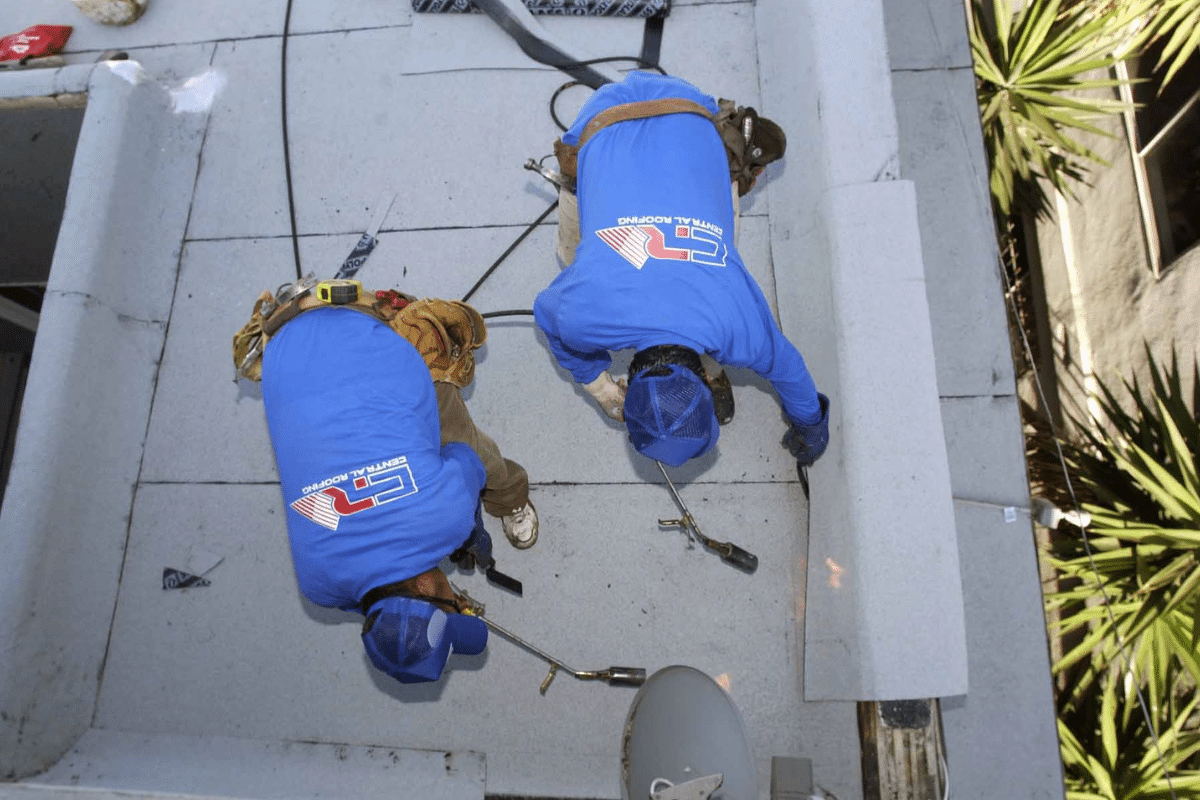
6. Bonus for 2026: Storm and Rain-Readiness Experience
This one didn't make most "what to ask a roofer" lists a few years ago, but with a historic El Niño on the table, it should be on yours. A few questions worth asking any contractor you're considering this season:
- Do they proactively check drainage and ponding? A contractor who flags clogged drains and standing water during a routine visit — see why flat roofs develop ponding — is thinking ahead of the storm, not just responding to it.
- Can they actually respond during a storm? Ask about their emergency repair capacity and realistic response times during a major weather event, not just on a normal week.
- Do they do pre-season inspections? A fall inspection ahead of the wet season catches the seam, flashing, or drain issue that would otherwise turn into a January emergency call — see our roof inspection services and maintenance checklist.
I'm Andy, and I've Been Where You Are
I've spent more than 30 years in commercial roofing across Los Angeles, Orange, Riverside, San Bernardino, and Ventura counties, and I've seen what happens when a property owner picks the wrong contractor right before a rough winter. My goal with this list isn't to sell you on Central Roofing specifically — it's to make sure you ask the right questions of whoever you hire. If you'd like a second opinion or a straight assessment of where your roof stands heading into this El Niño season, that's what we're here for.
Frequently Asked Questions
How strong is the El Niño forecast for Los Angeles this winter (2026-27)?
As of NOAA's August 2026 outlook, forecasters put the odds at over 90% for a very strong El Niño, with a real chance it becomes the strongest on record. Forecasts can shift as the season approaches, so check the National Weather Service Los Angeles/Oxnard office for the latest.
Should I get my commercial roof inspected before El Niño hits?
Yes. A pre-season inspection is the single best way to catch the seam, drain, or flashing issue that turns into an emergency during a major storm. See our roof inspection services to schedule one.
How do I verify a commercial roofer's license in California?
Use the Contractors State License Board's free license lookup tool. It shows license status, bond information, and any recorded violations in a couple of minutes.
What is CERTA certification and why does it matter?
CERTA (Certified Roofing Torch Applicator) is a National Roofing Contractors Association training program for safely handling torch-applied modified bitumen roofing. It matters because uncertified torch work is a genuine fire risk — always confirm certification before approving that type of installation.
Does El Niño rain actually damage commercial roofs, or is it just inconvenient?
It can cause real damage — ponding water adds weight and accelerates membrane breakdown, wind can lift flashing and seams, and any existing weak point in the roof is far more likely to become an active leak under sustained heavy rain. See our guide on preventing commercial roof damage for the fuller picture.
Is now a good time to schedule roof work before winter?
Yes — fall is generally the best window for planned roof work in Southern California, and with a potentially historic wet season ahead, contractor schedules are likely to fill up faster than usual. See our seasonal timing guide for the full breakdown.
Let's Fix Your Roof Right — Get a Free Estimate Today
Heading into a historic El Niño season, now's the time to know where your roof actually stands. Get a free, no-pressure estimate before the rain does.
Request Your Free EstimateLet’s Fix Your Roof Right — Get a Free Estimate Today
Serving Los Angeles & Orange County for 30+ years.
Trusted. Local. Professional.
Central Roofing Company Headquarters
555 W. 182nd Street
Gardena, CA 90248
📞 310-527-6770
Get A Quote
Serving Southern California
Central Roofing provides commercial roofing services across Los Angeles County, Orange County, San Bernardino County, and Riverside County — including repairs, coatings, maintenance, re-roofing, and emergency leak response.
555 W. 182nd St. Gardena, CA 90248
Ph: 310-527-6770
Our Office Locations:
 Services
Our Services
CA license #684960 – Central Roofing, 2026 ©All Rights Reserved | Terms of Use | Privacy Policy | Built by Dymic


